
How Old Is My Refrigerator?
The quickest answer is on the label inside the fridge: it either prints the build date or carries a serial number that holds it. Here is where to look, how to read it and what the age should make you do.
By Suraj Jha · Updated 2026-11-09
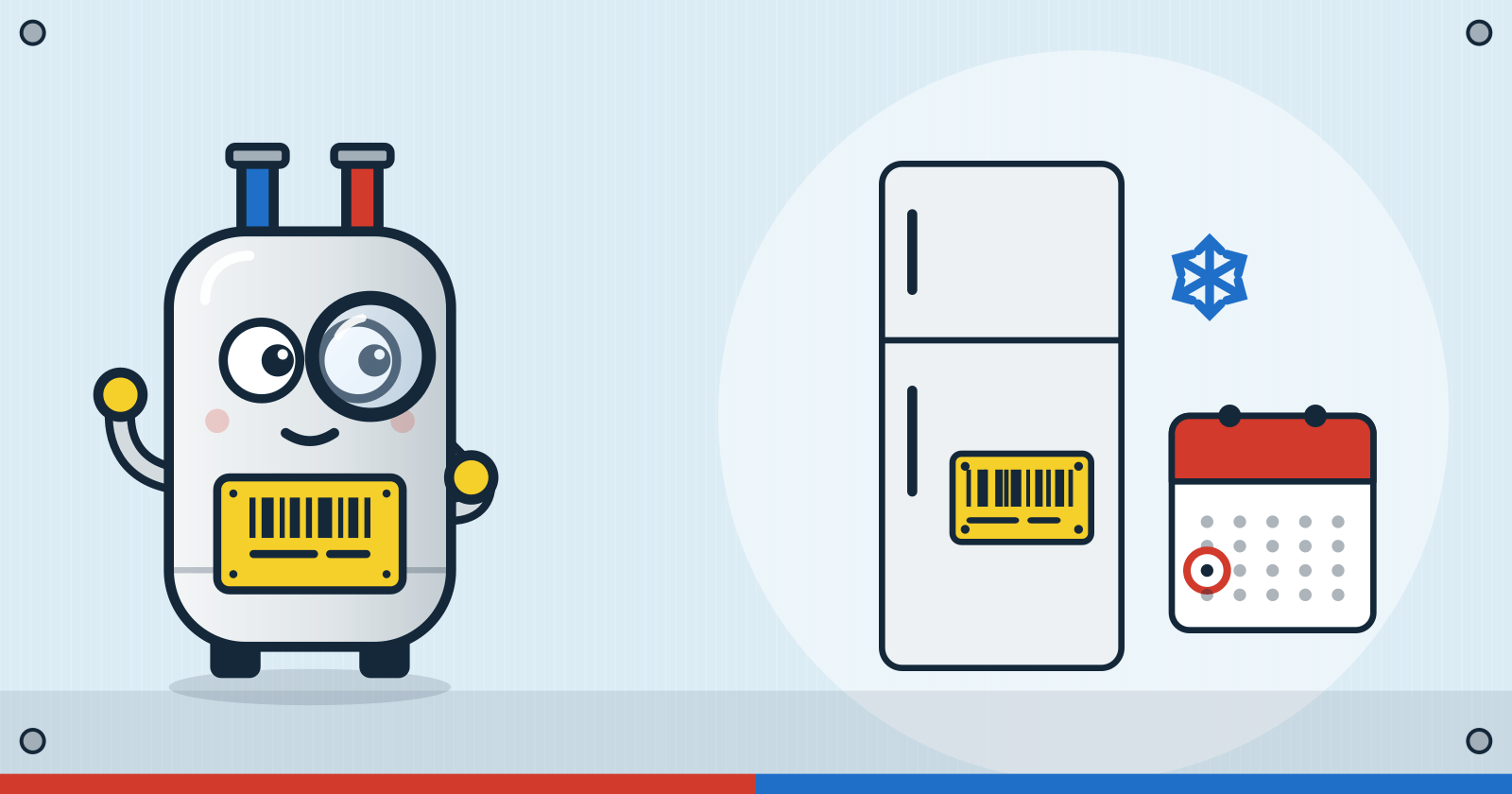
Step 1: Find the label
Open the refrigerator and look inside the fresh-food compartment. The rating label is usually on the upper left or right wall, under the top shelf or on the ceiling. Some models also have a label on the back of the cabinet or on the base near the compressor, but you should not need to pull the unit out. If the label is behind a drawer, slide the drawer out.
The label shows a model number and a serial number. The serial is the one that holds the date. Photograph it with your phone so you do not have to keep the door open while you read it.
Step 2: Look for a printed date
Check the label for a line such as “MFG DATE”, “DATE OF MANUFACTURE” or a month and year in a box. Where there is one, you are done: that is the manufacturer’s own date, and it beats any decoder. Enter it in the tool on the appliance lookup page to see the age and how much of the typical life is used.
Step 3: Decode the serial number
If there is no printed date, the serial usually contains one. The code is different for every maker:
- GE and its sister brands: the first two letters are the month and the year. The letters repeat every twelve years, so a serial can mean two or three different years. See the GE decoder.
- LG: the first digit is the last digit of the year and the next two digits are the month. See the LG decoder.
- Other makers: many refrigerators from Whirlpool, Samsung, Frigidaire and others also hold the date in the serial, but their year codes differ and published guides disagree on the details, so we do not decode them yet. Use the printed date or ask the manufacturer.
When a decoder offers more than one possible year, choose with the clues in the next section.
Step 4: Narrow it down without a serial
If the label is unreadable or missing, you can still bracket the age:
- Paperwork: the receipt, delivery slip, warranty card or a registration email. The owner’s manual often carries a print date, which is close to the build date.
- Retailer or utility records: an appliance rebate or recycling program may have your purchase on file.
- Features: a refrigerator with a water dispenser in the door, a digital panel or a smart display is far more likely to be recent than one with a mechanical dial and a freezer on top.
- The house: if the refrigerator came with the home, the date the kitchen was installed or last remodelled is an upper limit.
- Call the maker: customer support can usually give a build date from the model and serial number.
What the age means
| Age | What it usually means |
|---|---|
| Under 8 years | Repair freely. Keep the coils and gaskets clean. |
| 8 to 13 years | Normal wear. Budget for a replacement and think twice before an expensive repair. |
| Over 13 years | Past the typical life. A major repair rarely pays off. |
| Before about 2001 | Likely to use much more electricity than a current model, even if it runs fine. |
The typical life of about 13 years is a planning number, not a deadline. A refrigerator that has been kept clean, level and well ventilated can run much longer, and one that is crowded into a hot corner can wear out sooner.
The energy argument
The cost of running a refrigerator is where age matters most. Federal efficiency standards for refrigerators tightened in 1993 and again in 2001, and units older than that use noticeably more electricity than the same-size model today. A plug-in energy meter, which costs little, will show what yours draws over a day. Multiply by your electricity rate to see the yearly cost, and compare it with the rated yearly cost on a new model’s yellow EnergyGuide label. For a refrigerator that is also near the end of its typical life, the savings can tip the decision.
When to replace
Replace instead of repairing when:
- The repair is to the sealed system (compressor, evaporator or refrigerant leak). These are the expensive ones.
- A single repair costs more than about half the price of a comparable new refrigerator.
- The refrigerator is past 13 years and has needed repairs in each of the last two years.
- Food is spoiling or the temperature will not hold, because lost food adds up.
If you are replacing, measure the opening, the doorway and the path to it before choosing a model. Check the water-line connection if the new unit has an ice maker.
Keep it going until then
Vacuum the condenser coils at least once a year, keep a few inches of clearance behind and above the unit, and check that the door seals close on a slip of paper. A refrigerator that is not working hard lasts longer and costs less to run.
Frequently asked questions
How long do refrigerators last?
The NAHB and Bank of America study of home components puts a standard refrigerator at about 13 years and a compact one at 9, for first-owner use. Many keep running well beyond that, but repairs and energy use tend to rise.
Is it worth repairing a 15-year-old refrigerator?
Usually only for a cheap fix. A sealed-system repair (compressor or refrigerant leak) on a unit that old often costs more than half of a new one, and the next failure is not far behind. A door gasket or a fan motor is a different matter.
Does an old refrigerator really cost more to run?
Yes, often a lot more. Federal efficiency standards for refrigerators tightened in 1993 and again in 2001, so a unit from before those dates typically uses far more electricity than a new one. A plug-in energy meter will tell you what yours actually draws.
What should I do with a second, older refrigerator in the garage?
Check its age and cost, because it is often the least efficient appliance in the house and it runs all year. If it is not earning its place, unplug it and recycle it through the utility or the retailer rather than keeping it as a spare.
Can I find the age without opening the fridge?
Sometimes. Some models have a second label on the back or on the compressor side, but you would have to pull the unit out, which is rarely worth it. The fresh-food compartment label is normally easier to reach.
Next steps
More about home appliances
Browse all guides.